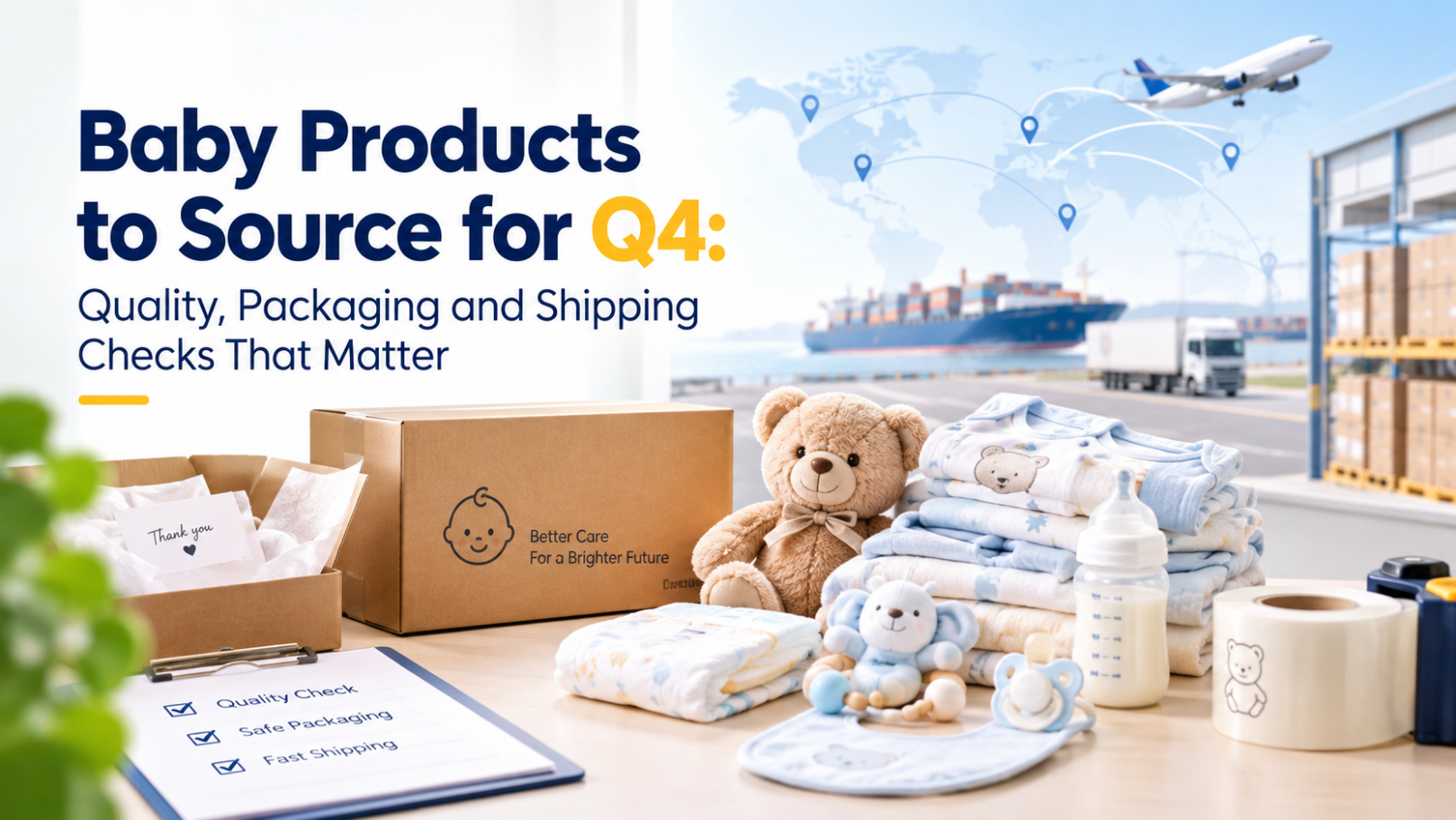
Baby Products to Source for Q4: Quality, Packaging and Shipping Checks That Matter
Baby Products to Source for Q4: Quality, Packaging and Shipping Checks That Matter
Q4 can be an important sales period for baby product brands, with holiday gifting, seasonal shopping, and growing demand for practical products for parents and caregivers. But sourcing baby products for Q4 requires more than finding popular items at competitive prices. Sellers also need to consider product safety, supplier reliability, packaging quality, and shipping performance.
Whether you sell through Shopify, Etsy, Wix, or WooCommerce, the right sourcing and fulfillment strategy can help you prepare for seasonal demand without creating unnecessary inventory or delivery problems.
In this guide, we’ll explore baby products worth considering for Q4, what to check before choosing a supplier, and how to prepare products for storage, packing, and international shipping.
1. Baby Products Worth Sourcing for Q4
When selecting baby products for the holiday season, focus on practical items, giftable accessories, and products that fit your target audience. Product selection should always take age suitability and applicable safety requirements into account.
Baby Clothing and Seasonal Accessories
Baby bodysuits, pajamas, socks, hats, and seasonal clothing can be attractive options for sellers targeting parents and gift buyers.
Before placing an order, check:
-
Fabric composition and consistency between batches
-
Stitching, seams, buttons, snaps, and other attachments
-
Size charts and labeling accuracy
-
Color consistency and shrinkage after washing
-
Packaging that keeps products clean during storage and transit
Clothing can be relatively easy to store, but size variations and multiple colors can quickly increase the number of SKUs you need to manage. Start with a manageable assortment and monitor which sizes and styles perform best.
Bibs, Burp Cloths, and Feeding Accessories
Everyday feeding accessories may appeal to customers looking for practical gifts and reusable essentials.
Potential products include fabric bibs, burp cloths, and selected feeding accessories designed for the intended age group.
When evaluating these products, review the material specifications, stitching, surface finish, cleaning instructions, and any small components. For products intended for direct food contact, confirm that the materials and product design meet the applicable requirements in your target market.
Do not assume that a supplier's general product certificate automatically covers every material, model, or intended use.
Nursery Organization and Storage
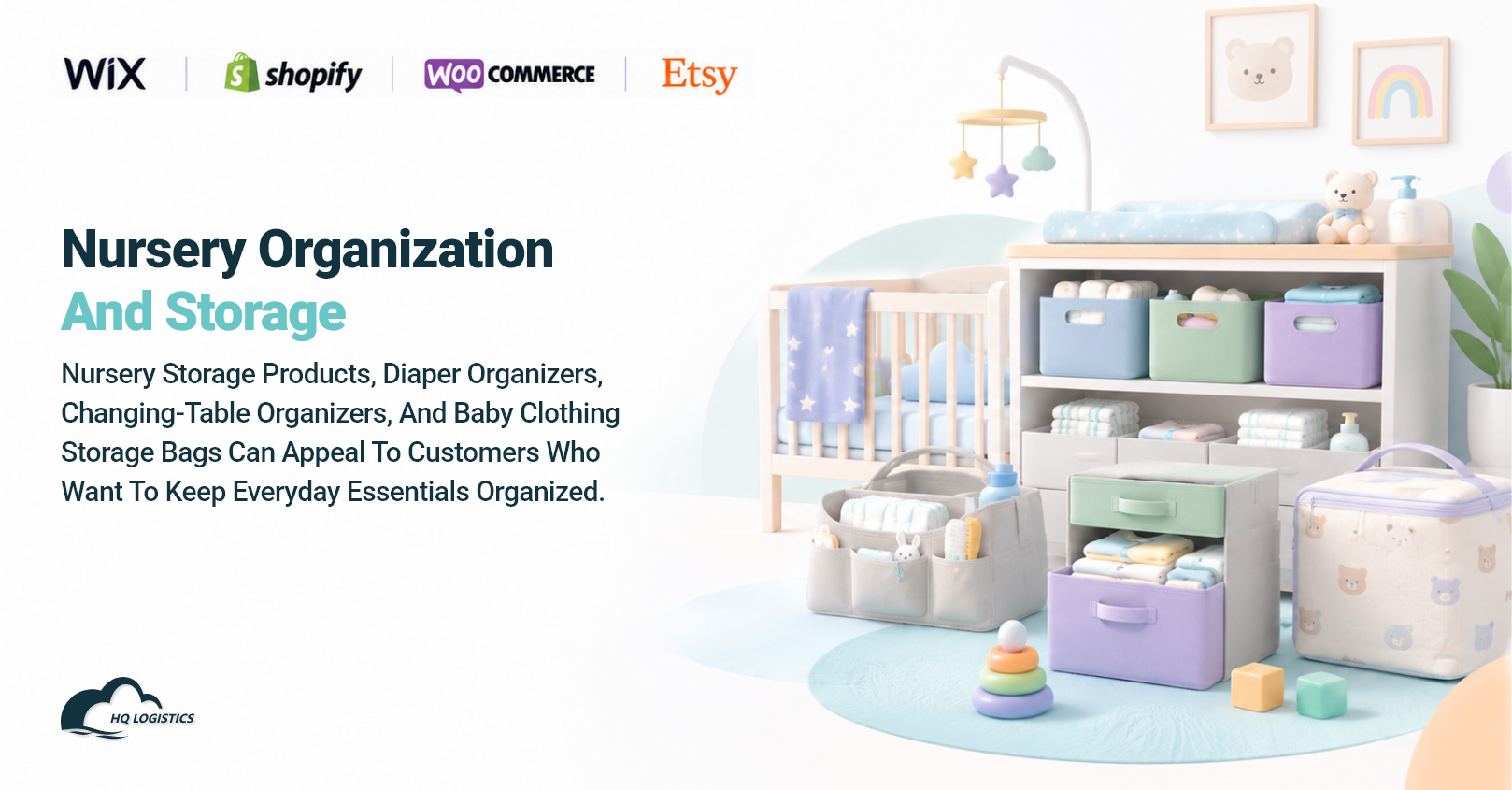
Nursery storage products, diaper organizers, changing-table organizers, and baby clothing storage bags can appeal to customers who want to keep everyday essentials organized.
These products may also work well for ecommerce stores selling broader home and family collections.
Check the following before sourcing:
-
Actual product dimensions and usable capacity
-
Material durability and odor
-
Zippers, handles, seams, and other structural details
-
Folded dimensions and shipping volume
-
Packaging protection against moisture, dust, and deformation
For these products, packaging size can have a significant impact on shipping costs. Compare the packed dimensions of different suppliers rather than evaluating products only by their unit price.
Stroller Organizers and Travel Accessories
Parents and caregivers may appreciate practical accessories that make outings easier, such as storage organizers and selected travel bags.
Pay close attention to attachment mechanisms, load limits, durability, and compatibility claims. If an accessory attaches to a stroller or other baby equipment, verify that its intended use and safety information are supported by appropriate product documentation.
Avoid marketing an accessory as universally compatible unless the supplier can substantiate that claim.
Baby Toys and Gift Sets
Age-appropriate toys and gift sets can be relevant to Q4 gifting, but they require particularly careful supplier evaluation.
Before sourcing toys, verify age grading, material safety, construction quality, small-parts risks, and applicable testing and labeling requirements. Products intended for infants and children under three can be subject to specific restrictions on small parts that present choking hazards. The U.S. Consumer Product Safety Commission provides guidance on these requirements.
For your first Q4 assortment, it may be more manageable to start with a small number of well-documented products rather than adding many unverified toy variations at once.
2. How to Evaluate Baby Product Suppliers
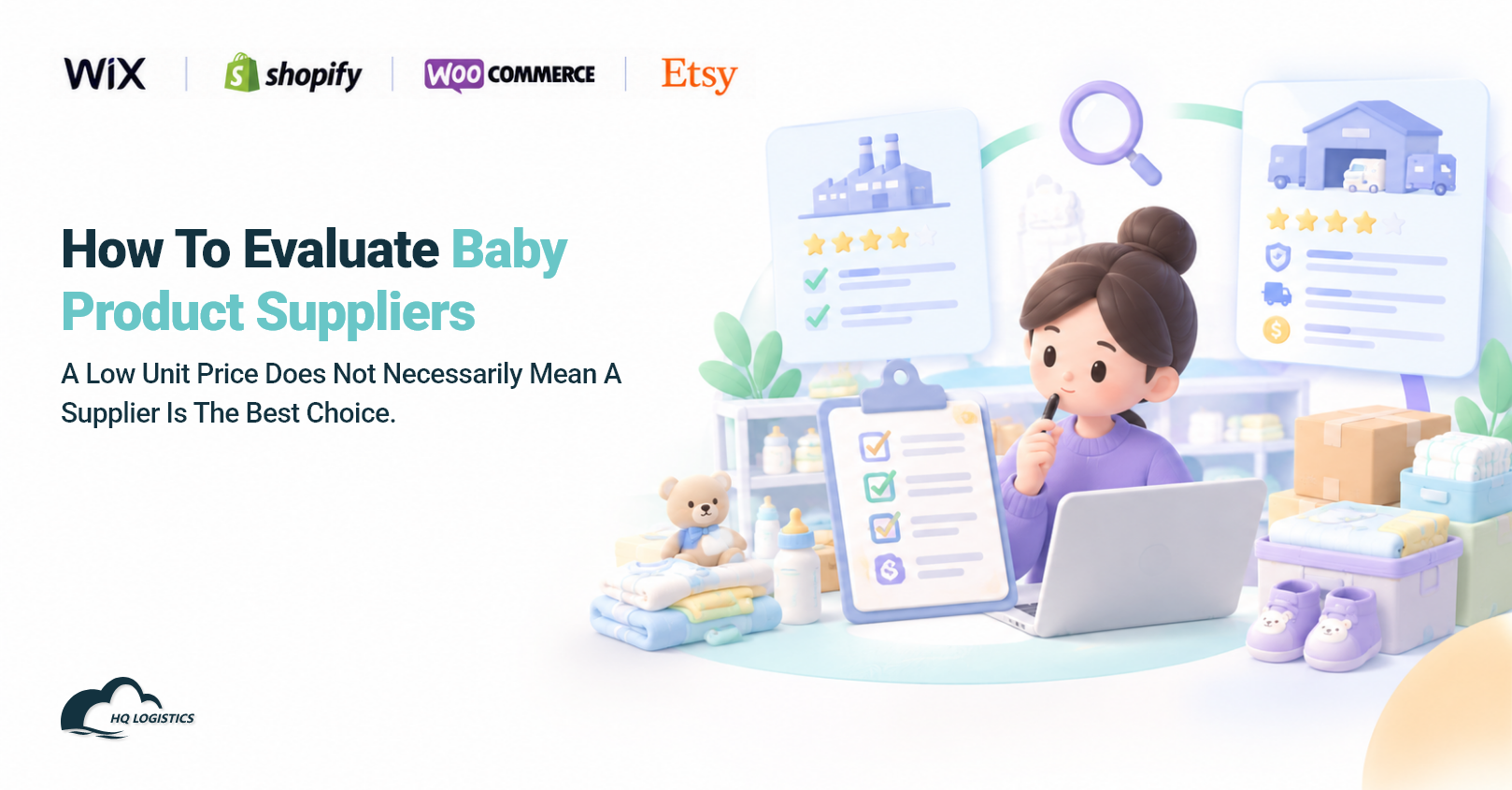
A low unit price does not necessarily mean a supplier is the best choice. For baby products, consistent quality, traceable product information, and reliable production schedules matter just as much as cost.
Request Product Specifications and Test Documents
Ask potential suppliers for detailed information about the exact product you intend to sell.
Depending on the product, this may include:
-
Material composition and component specifications
-
Intended age range and instructions for use
-
Relevant laboratory test reports and safety certifications
-
Product labels, warnings, and care instructions
-
Batch or production information
-
Packaging specifications and available customization options
Review the documents to confirm that they match the actual product model, materials, components, and intended market. A document for a similar-looking product may not establish compliance for your specific item.
For products sold in the United States, applicable children's product safety rules may require third-party testing and a Children's Product Certificate (CPC). Requirements vary by product category. Review the relevant CPSC business guidance before importing or selling regulated products.
Check Supplier Consistency
A successful sample order does not guarantee that every production batch will meet the same standard.
Before committing to larger quantities, discuss how the supplier controls materials, production processes, and finished-product quality.
Questions worth asking include:
-
Can the supplier maintain the same specifications across repeat orders?
-
How are defective products identified and handled?
-
Can the supplier provide batch or production records?
-
What is the process for reporting and resolving quality issues?
-
How much notice is needed for production changes or delays?
For growing ecommerce brands, a documented process is more useful than relying solely on verbal assurances.
Confirm Production Capacity Before Peak Season
Q4 demand can put pressure on suppliers, especially when multiple brands are ordering the same products.
Confirm production lead times, available quantities, replenishment options, and cutoff dates well before your busiest sales period.
If a product requires custom colors, private labeling, or branded packaging, allow additional time for artwork approval, sample confirmation, and production.
A reliable supplier should be able to explain realistic production timelines and communicate changes early.
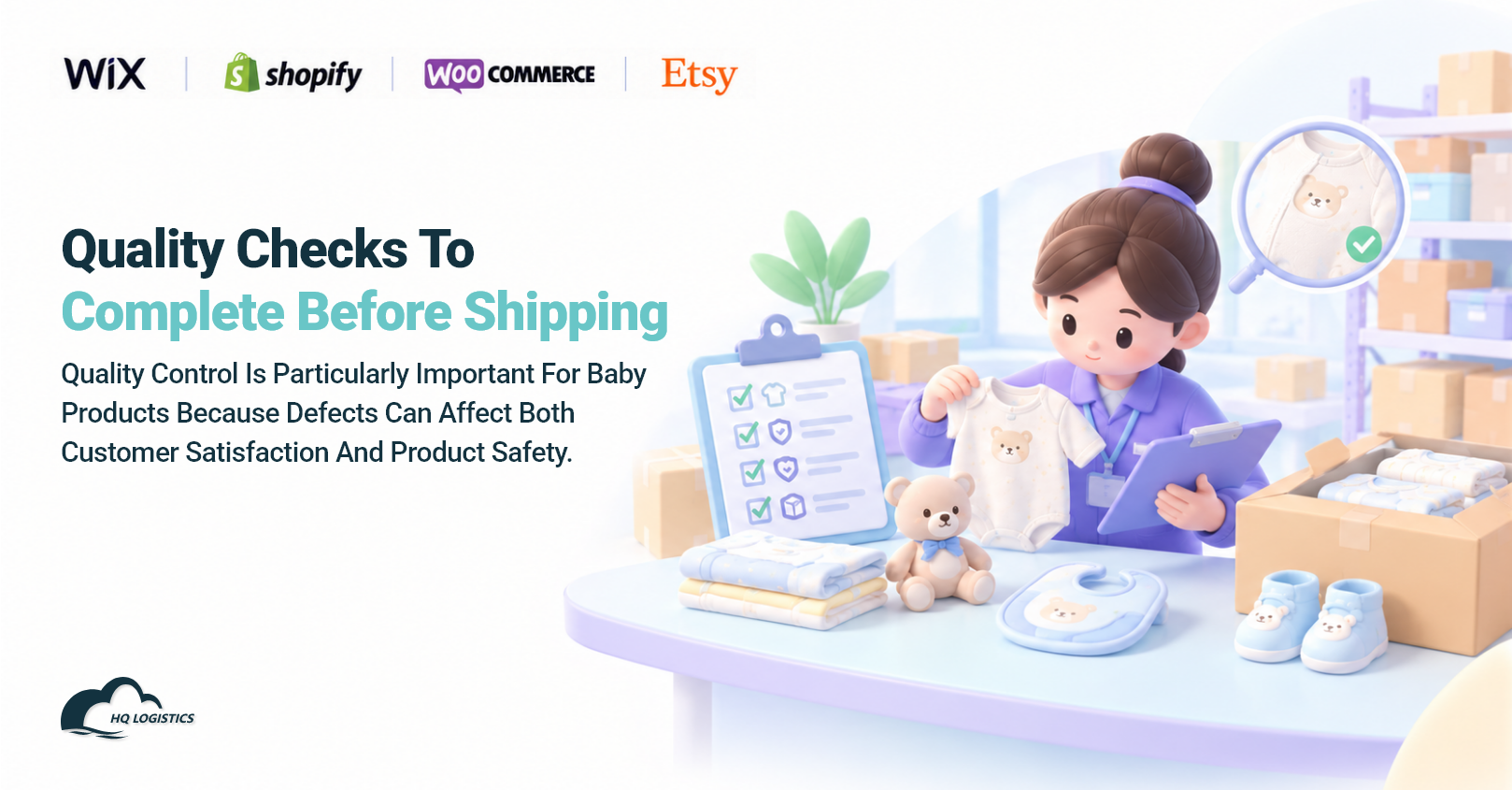
3. Quality Checks to Complete Before Shipping
Quality control is particularly important for baby products because defects can affect both customer satisfaction and product safety.
A practical inspection process should be based on the product's risk level, specifications, and applicable requirements.
Inspect Product Appearance and Workmanship
Check whether the finished product matches the approved sample and specification.
For clothing and fabric accessories, review seams, stitching, loose threads, fabric defects, and label placement. For storage products, check dimensions, zippers, handles, and structural integrity.
For toys and other products with small components, appearance checks alone are not enough. Applicable safety testing and compliance documentation must be addressed separately.
Verify Product and Packaging Information
Confirm that the product model, size, color, quantity, and SKU match the purchase order.
Review required warnings, care instructions, age information, and traceability details. Children's products sold in the United States may be subject to tracking-label requirements, including information that helps identify the manufacturer or private labeler and production details. See the CPSC tracking-label guidance.
For products sold in the European Union, requirements depend on the product category. Toys, for example, must meet applicable EU toy safety requirements and carry CE marking before being placed on the EU market. European Commission toy safety guidance.
Do not treat CE marking as a universal requirement for every baby product, or assume that a single certificate covers all markets and product categories.
Document Inspection Results
Keep records of inspection findings, defect rates, approved samples, and corrective actions.
For higher-risk products, use appropriate testing and qualified inspection services rather than relying on a basic visual check.
Clear inspection records also make it easier to identify recurring supplier issues and compare quality across production batches.
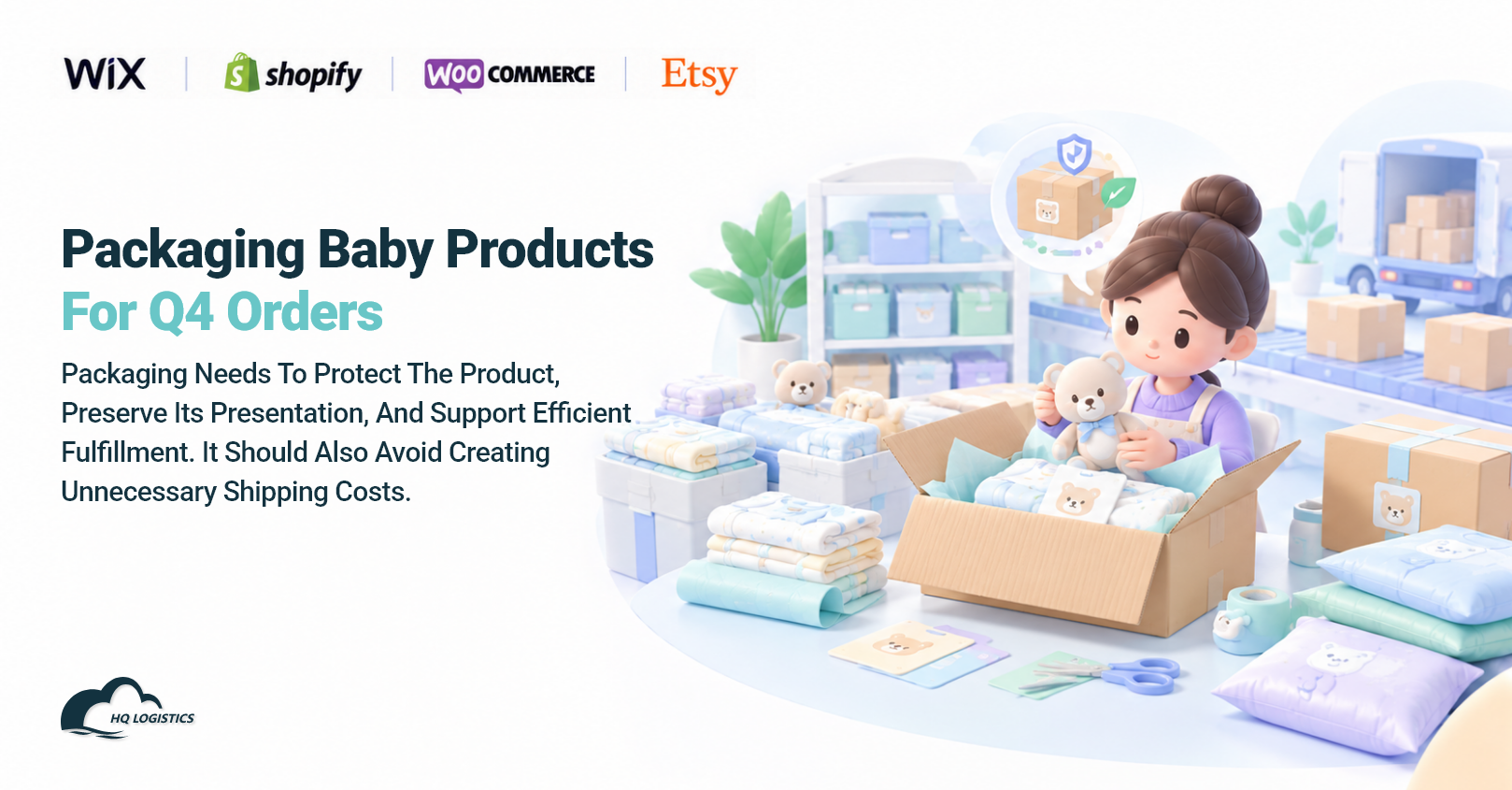
4. Packaging Baby Products for Q4 Orders
Packaging needs to protect the product, preserve its presentation, and support efficient fulfillment. It should also avoid creating unnecessary shipping costs.
Choose Packaging Based on the Product
Different baby products need different levels of protection.
| Product type | Packaging considerations |
|---|---|
| Baby clothing and fabric accessories | Clean inner bags, moisture protection, neat folding |
| Nursery organizers | Protection against dust, crushing, and deformation |
| Feeding accessories | Product-appropriate hygiene protection and secure packing |
| Toys and gift sets | Secure components, suitable retail packaging, required warnings |
| Stroller accessories | Protection for straps, clips, buckles, and other components |
The table is a practical starting point, not a substitute for product-specific packaging standards or safety requirements.
Consider Custom Packaging for Brand Recognition
Custom packaging can help baby brands create a more consistent unboxing experience. Options may include branded boxes, product inserts, thank-you cards, and coordinated packaging designs.
Before approving custom packaging, confirm that it does not obscure required product information or warnings. Avoid unsupported claims such as “non-toxic,” “hypoallergenic,” or “100% safe” unless you have adequate evidence to substantiate them.
For Q4, approve artwork and packaging samples early enough to allow time for revisions and production.
Reduce Dimensional Weight Without Sacrificing Protection
Large boxes can increase shipping costs when carriers charge based on dimensional weight.
Review packaging dimensions for each SKU and avoid unnecessary empty space. However, reducing packaging size should never compromise product protection or create pressure that damages the item.
For products sold as gift sets, test the complete packed unit rather than calculating shipping costs from the individual products alone.
5. Shipping Baby Products to the United States and Europe
International shipping involves more than choosing a carrier. Product eligibility, import documentation, destination-country requirements, parcel dimensions, and delivery expectations all influence the final route.
Shipping to the United States
Before shipping baby products to the U.S., identify the applicable product safety requirements and determine who is responsible for meeting them.
Depending on the product, requirements may include testing, certification, labeling, and traceability. Importers and other responsible businesses should confirm their obligations before the goods are dispatched.
For shipping operations, also check:
-
Whether the selected carrier accepts the specific product
-
Whether customs declarations accurately describe the goods
-
Whether the required documentation is available
-
Whether duties, taxes, and clearance charges are included in the shipping arrangement
-
Whether tracking is available through the final delivery stage
Do not wait until a shipment is already in transit to discover that a required document is missing.
Shipping to Europe
European destinations may have different delivery networks, import procedures, and product-specific compliance requirements.
Before selecting a route, confirm the destination country, applicable product rules, customs arrangements, and expected transit time. If your business sells in multiple European markets, review service coverage and performance for each major destination.
For products regulated under EU legislation, confirm that the relevant conformity assessment, technical documentation, labeling, and other obligations have been addressed before placing the product on the market.
Compare the Complete Shipping Cost
A route with a low base rate may not be the most cost-effective choice once additional charges are included.
Compare actual or dimensional weight, handling fees, remote-area surcharges, customs arrangements, tracking quality, and delivery performance.
For baby product brands, reliable delivery can also help reduce customer inquiries and improve the overall shopping experience during peak season.
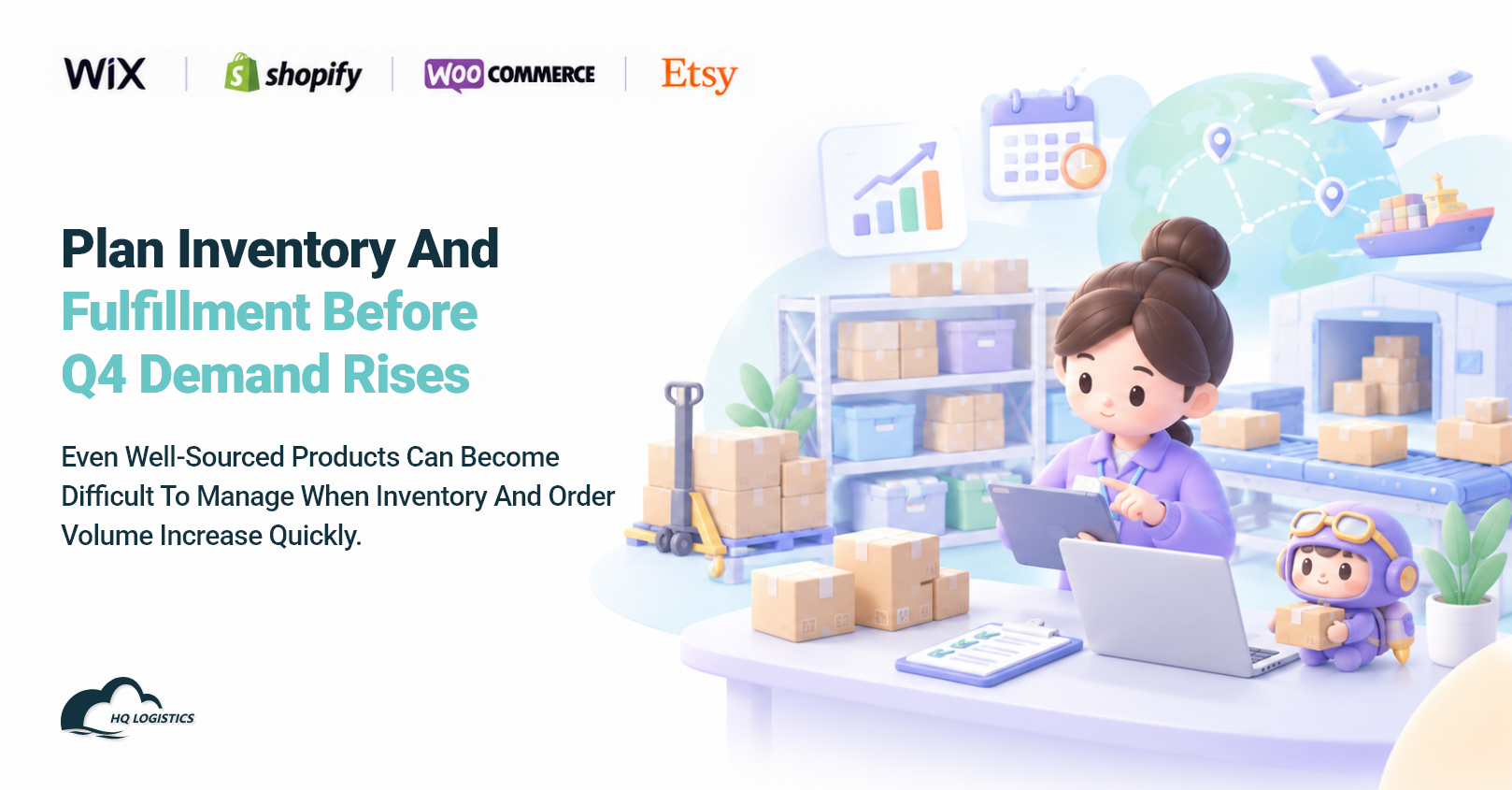
6. Plan Inventory and Fulfillment Before Q4 Demand Rises
Even well-sourced products can become difficult to manage when inventory and order volume increase quickly.
Start by identifying your priority SKUs and reviewing historical sales, product margins, supplier lead times, and expected demand. Avoid ordering large quantities based only on seasonal assumptions.
A practical Q4 workflow looks like this:
Forecast demand → Confirm supplier capacity → Approve samples and documentation → Inspect incoming inventory → Organize warehouse stock → Process and pack orders → Dispatch through suitable shipping routes → Monitor delivery performance
If you sell multiple sizes, colors, or product bundles, accurate SKU records are essential. They help prevent picking errors, inventory mismatches, and incorrect shipments.
A fulfillment partner can also help coordinate inbound inventory, product checks, packing requirements, and shipping arrangements. The exact services available will depend on the product, market, and agreed operating procedures.
7. How HQ Fulfillment Supports Baby Product Brands
For ecommerce sellers, sourcing and fulfillment work best when they are planned together. A product may have an attractive purchase price, but inconsistent quality, poor packaging, or unsuitable shipping options can undermine its profitability.
HQ Fulfillment supports ecommerce brands with services that can include product sourcing, warehousing, order processing, quality checks, packaging coordination, and international shipping.
Depending on your product and business requirements, our team can help you:
-
Coordinate sourcing:
Compare product options and gather supplier information. -
Organize quality checks:
Review products against agreed specifications and inspection requirements. -
Manage inventory:
Coordinate warehouse storage and SKU organization for eligible products. -
Prepare orders:
Arrange picking, packing, and approved branded packaging. -
Review shipping options:
Evaluate available routes according to product eligibility, destination, cost, and delivery expectations. -
Support business growth:
Adjust sourcing and fulfillment workflows as your order volume and product range expand.
Baby products need careful, product-specific compliance checks. Our fulfillment services do not replace the testing, certification, or regulatory responsibilities of manufacturers, importers, and sellers.
If you're preparing a baby product collection for Q4, visit HQ Fulfillment or explore our China fulfillment services to discuss your sourcing and logistics needs.
Frequently Asked Questions
1. What baby products are worth sourcing for Q4?
Baby clothing, bibs, burp cloths, nursery organizers, selected travel accessories, and age-appropriate toys may be worth evaluating. The best products depend on your audience, competition, margins, supplier reliability, and applicable safety requirements.
2. What should I check before choosing a baby product supplier?
Review product specifications, material information, relevant test reports, certifications, production capacity, quality-control procedures, and batch traceability. Make sure the documentation matches the exact product you intend to sell.
3. Do baby products require safety certificates?
Some do, depending on the product category, intended use, and destination market. Requirements may include testing, certification, labeling, and technical documentation. Confirm the applicable rules before importing or selling the product.
4. How can I reduce shipping costs for baby products?
Compare complete shipping costs, optimize packaging dimensions without compromising protection, organize SKUs accurately, and select routes based on product eligibility and destination. For bulky items, dimensional weight can be especially important.
5. Should I stock baby products before Q4?
Planning ahead can reduce the risk of supplier delays and stockouts, but inventory decisions should be based on sales history, expected demand, supplier lead times, and available cash flow. Start with priority SKUs and use actual sales performance to guide replenishment.

Final Thoughts
Sourcing baby products for Q4 requires a balance of product selection, supplier reliability, quality control, packaging, and shipping preparation. The most attractive product is not necessarily the one with the lowest unit price, but the one you can source consistently, verify appropriately, package correctly, and deliver reliably.
By checking product documentation early, approving samples before production, and coordinating inventory with fulfillment, ecommerce brands can prepare for seasonal demand with greater confidence.
Baby products to source for Q4 should be chosen with the entire supply chain in mind—from the first supplier conversation to the moment the order reaches the customer.