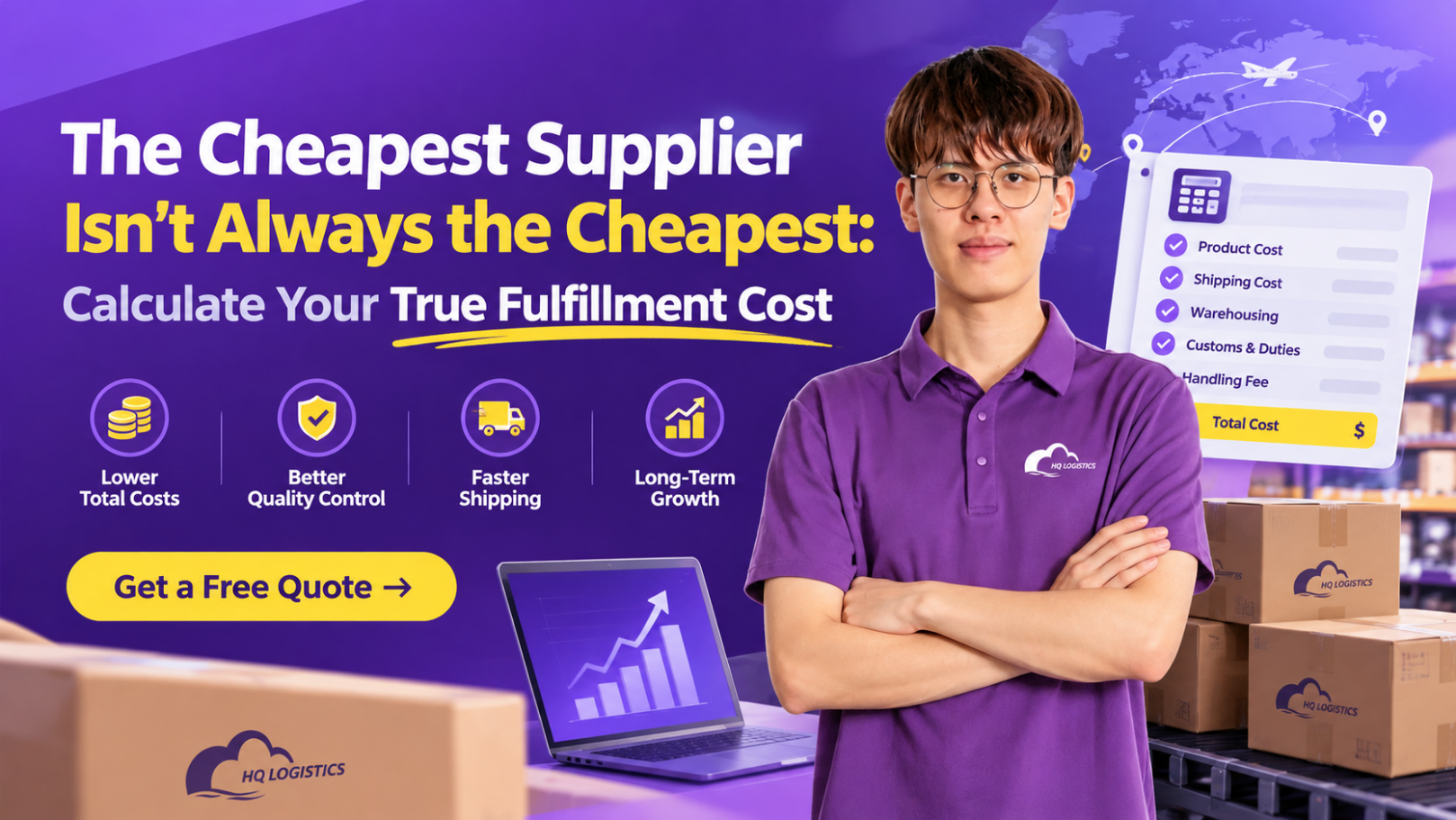
The Cheapest Supplier Isn't Always the Cheapest: Calculate Your True Fulfillment Cost
The Cheapest Supplier Isn't Always the Cheapest: Calculate Your True Fulfillment Cost
When choosing a supplier, it's tempting to focus on one number: the product price.
Supplier A offers a product for $4.00. Supplier B offers the same product for $4.50.
At first glance, Supplier A looks like the obvious choice.
But what if Supplier A has higher defect rates, more expensive shipping, slower processing, or frequent stockouts?
Suddenly, that $0.50 saving may not be a saving at all.
For Shopify and other ecommerce brands, the cheapest product supplier isn't necessarily the cheapest fulfillment solution.
To understand your real costs, you need to look beyond the product price and calculate the total cost of getting an order from the supplier to your customer's door.
In this guide, we'll explain how to calculate your true fulfillment cost, identify hidden expenses, compare suppliers more accurately, and build a more cost-efficient supply chain as your business grows.
Why Product Price Doesn't Tell the Whole Story
A low product price can make a supplier look attractive, especially when you're testing products or trying to protect your margins.
However, fulfillment involves much more than purchasing inventory.
Your actual costs may include:
Product Cost | Quality Inspection | Packaging | Warehousing | Order Processing | Shipping | Returns | Replacement Orders
Depending on your business model, you may also need to account for inventory carrying costs, customs-related expenses, and the operational time spent resolving supplier or delivery problems.
Consider two suppliers offering the same product.
| Cost Component | Supplier A | Supplier B |
|---|---|---|
| Product price | $4.00 | $4.50 |
| Packaging | $0.40 | $0.25 |
| QC allocation | $0.20 | $0.10 |
| Fulfillment processing | $0.50 | $0.40 |
| Shipping | $5.50 | $4.80 |
| Total per order | $10.60 | $10.05 |
In this illustrative example, Supplier A has the lower product price, but Supplier B has the lower total fulfillment cost.
The difference is $0.55 per order.
At 1,000 orders, that represents $550 in potential savings before accounting for returns, storage, or other costs not included in the example.
The lesson: compare the total cost per delivered order, not just the product price.
Note: These figures are examples for illustration, not actual supplier quotations.
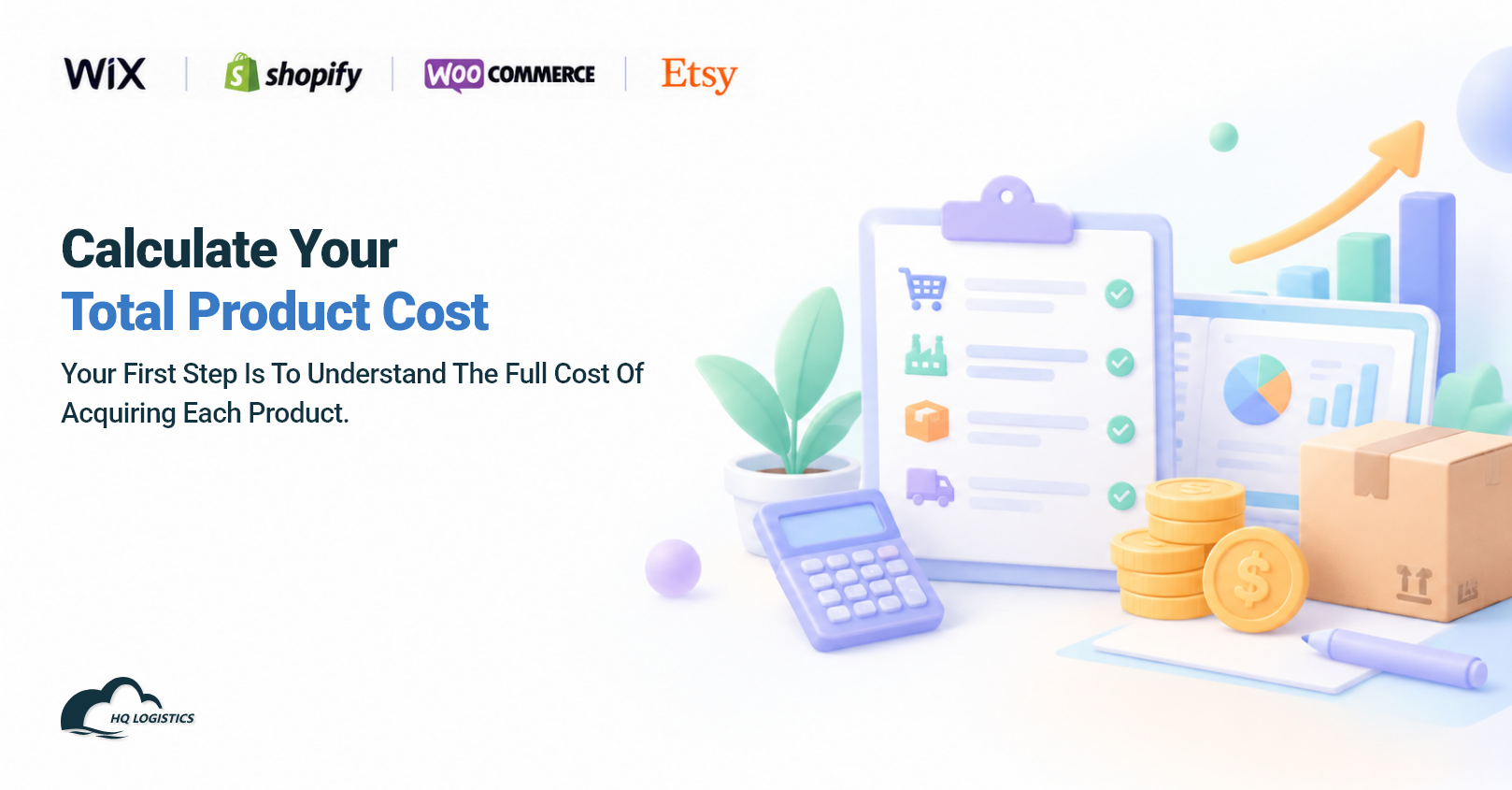
1. Calculate Your Total Product Cost
Your first step is to understand the full cost of acquiring each product.
This may include:
-
Supplier unit price
-
Customization or private-label charges
-
Product-specific packaging
-
Sample and testing costs
-
Quality inspection fees
-
Inbound transportation to your warehouse
Some expenses are charged per unit, while others apply to an entire batch.
For example, if you pay $200 for a quality inspection covering 1,000 units, the inspection cost allocated to each unit is $0.20.
A useful formula is:
Landed Product Cost per Unit = Product Cost + Allocated Sourcing, Inspection, Packaging, and Inbound Costs
The exact components depend on your supplier agreement and fulfillment model. Avoid counting the same expense twice if it is already included in another fee.
Why this matters
A supplier with a slightly higher quoted price may offer better packaging, more consistent quality, or lower inbound costs.
Before choosing a supplier, request a detailed quotation and clarify which services are included.
2. Include Quality Control and Defect Costs
Quality problems can create costs long after the product leaves the factory.
A defective item may lead to:
Refunds → Replacement Shipping → Customer Support → Negative Reviews
If the problem affects a large batch, the impact can be even greater.
For example, imagine you sell 1,000 units and 3% require refunds or replacements because of product defects.
That means 30 orders may be affected.
If each affected order costs an additional $8 to resolve, the direct additional cost would be $240, excluding staff time and potential damage to customer trust.
A supplier offering a lower unit price may not be the better option if product quality is inconsistent.
How to evaluate quality-related costs
Track:
-
Defect rate
-
Return and refund rate
-
Replacement shipping costs
-
Inspection costs
-
Customer complaints related to product quality
You can estimate your quality-related cost per order using:
Quality Cost per Order = Total Quality-Related Costs ÷ Total Orders
Use actual records whenever possible. If you don't yet have reliable data, start with a small test order and monitor performance before scaling.
3. Compare Shipping Costs, Not Just Shipping Quotes
Shipping is often one of the largest components of fulfillment cost.
However, the cheapest shipping quote may not provide the best overall value.
Consider:
Shipping Price | Transit Time | Tracking Quality | Delivery Reliability | Product Restrictions | Destination Coverage
A low-cost route may have a longer transit time or may not be suitable for certain products.
That can lead to delayed orders, more customer inquiries, or additional service costs.
Your shipping strategy should match your products and customers.
For example:
New Products → Flexible China Fulfillment
Proven U.S. Bestsellers → Consider U.S. Warehousing
Proven European Products → Consider EU Fulfillment
Battery-Powered Products → Confirm Suitable Shipping Options
Overseas warehousing may reduce the cost of individual shipments for some products, but it also introduces bulk transportation, storage, and local fulfillment expenses. Always compare the complete cost structure before changing your model.
4. Don't Forget Packaging and Fulfillment Fees
Packaging may look like a small expense, but it can add up when order volume increases.
Your packaging costs may include:
-
Standard product packaging
-
Protective materials
-
Shipping boxes or mailers
-
Branded labels
-
Thank-you cards and inserts
-
Custom packaging setup
-
Additional packing labor
Oversized packaging can also increase shipping costs when carriers charge according to dimensional weight.
At the same time, reducing packaging too aggressively can increase damage rates.
The goal is to find the right balance between protection, package size, cost, and customer experience.
Review your packaging efficiency
Ask:
Can the package be smaller without reducing protection?
Can several packaging components be consolidated?
Can custom packaging be prepared in advance?
Does the warehouse charge extra for special packing instructions?
For growing brands, coordinating sourcing, packaging, and fulfillment through one workflow may help reduce unnecessary handoffs and improve cost visibility.
5. Calculate Warehousing and Inventory Carrying Costs
Warehousing is another cost that can be easy to overlook.
Depending on your agreement, storage-related expenses may include:
Storage Fees | Receiving Fees | Inventory Handling | Stock Transfers | Long-Term Storage | Inventory Disposal
Even if a provider offers free storage, you should still consider the cost of moving inventory to the warehouse and the risk of unsold stock.
The risk of overstocking
Imagine you purchase 2,000 units of a seasonal product, but demand is lower than expected.
Your money is tied up in inventory that may take months to sell—or may never sell at the planned price.
The problem isn't just the storage fee.
It's also the capital you can no longer use for advertising, new products, or replenishment of proven bestsellers.
Use a hybrid inventory strategy
Instead of moving every product overseas, consider separating inventory by demand:
New or Uncertain Products:
Keep inventory flexible and test demand before committing to large quantities.Proven Bestsellers:
Consider pre-stocking in a U.S. or EU warehouse when sales volume and shipping economics support it.This approach can help balance delivery speed, inventory investment, and fulfillment costs.
6. Account for Returns, Refunds, and Replacement Orders
Your first shipment cost doesn't always represent the final cost of fulfilling an order.
Some customers may receive damaged products, order the wrong size, or return an item that doesn't meet their expectations.
Returns can create additional expenses, including:
-
Return shipping
-
Inspection and restocking
-
Replacement product costs
-
Reshipping
-
Refund processing
-
Disposal of unsellable inventory
Not every return is caused by a supplier, so it's important to separate supplier-related defects from sizing issues, customer preference, and other reasons.
Track return reasons to identify where the real costs are coming from.
For example, if many returns are linked to damaged packaging, improving packaging may be more effective than changing suppliers.
If returns are mainly caused by inconsistent product quality, supplier evaluation and QC may deserve more attention.
The goal is to identify the cause of the cost before deciding how to reduce it.
7. Include the Cost of Delays and Stockouts
Some fulfillment costs are less visible because they don't appear on an invoice.
A stockout can interrupt advertising campaigns, reduce available sales, and force customers to look elsewhere.
A delayed shipment can generate more customer service tickets and increase the risk of cancellations or refunds.
These costs are difficult to calculate precisely, but you can monitor useful indicators such as:
Stockout Days | Lost Sales Estimates | Late Shipment Rate | Cancellation Rate | Customer Support Volume
For example, if a bestseller is unavailable for five days during a major promotion, the financial impact may be much greater than the savings from choosing a slightly cheaper supplier.
When comparing suppliers, evaluate not only the price but also:
-
Production lead time
-
Replenishment reliability
-
Order processing time
-
Inventory accuracy
-
Communication speed
-
Ability to handle demand spikes
A supplier with reliable replenishment can help protect sales opportunities that a lower-priced but inconsistent supplier might put at risk.
8. Calculate the True Cost per Delivered Order
Now you can bring the numbers together.
A practical formula is:
True Fulfillment Cost per Order = Total Relevant Fulfillment Costs ÷ Number of Orders Successfully Delivered
Depending on your business, the numerator may include:
Product Cost + Inbound Freight + QC + Packaging + Storage + Processing + Outbound Shipping + Duties and Other Applicable Fees + Returns and Replacement Costs
Be consistent about which expenses you include. If you want to compare suppliers fairly, use the same cost categories, time period, destination mix, and order profile for each option.
For example, don't compare one supplier's product-plus-shipping quote with another supplier's fully loaded cost.
Also distinguish between:
-
Cost per order:
The total cost associated with processing and delivering an order. -
Cost per unit:
The cost of each individual product. -
Landed cost:
The cost of bringing inventory to a specified location, which may include product cost, transportation, insurance, duties, and other applicable charges.
These measurements answer different questions. Using them correctly makes supplier comparisons more useful.
9. Compare Suppliers With a Standardized Cost Sheet
Before switching suppliers, build a simple comparison sheet.
Use the same product specification, order quantity, packaging requirements, destination, and shipping service wherever possible.
| Cost or Performance Factor | Supplier A | Supplier B |
|---|---|---|
| Product unit price | ||
| Inbound transportation | ||
| Quality inspection | ||
| Packaging | ||
| Storage and handling | ||
| Order processing | ||
| Outbound shipping | ||
| Returns and replacements | ||
| Average delivery time | ||
| Defect rate | ||
| Replenishment lead time | ||
| Estimated total cost per delivered order |
Don't fill every blank with a guess.
If a supplier can't provide a figure, mark it as unknown and ask for clarification. For variable expenses, use a reasonable range and test the result under different scenarios.
Look beyond the lowest total
A supplier comparison should also consider whether the provider can support your expected volume, product requirements, target markets, and customer delivery expectations.
The lowest-cost option on paper may not be the best operational fit for your business.
10. Optimize the Whole Supply Chain, Not One Individual Fee
Once you understand your actual costs, look for improvements across the full process.
Improve sourcing
Compare suppliers based on product quality, unit cost, production capacity, and replenishment reliability—not price alone.
Reduce avoidable packaging costs
Use appropriately sized packaging that protects the product without adding unnecessary material or volume.
Improve quality control
Identify defects before products reach customers to reduce preventable refunds, replacements, and returns.
Choose the right shipping channel
Match the route to the product, destination, delivery requirements, and total cost.
Position inventory strategically
Keep new products flexible while considering local warehousing for proven bestsellers.
Improve inventory planning
Use sales history, demand forecasts, and replenishment lead times to reduce both stockouts and excess inventory.
Reduce unnecessary handoffs
When sourcing, QC, packaging, warehousing, and shipping are coordinated, it can be easier to identify delays and understand where costs are coming from.
The aim isn't to make every individual fee as low as possible.
It's to reduce the total cost of delivering a good customer experience.
How HQ Can Help Ecommerce Brands Control Fulfillment Costs
For growing ecommerce brands, HQ can support multiple stages of the supply chain through one connected workflow.
Depending on your product and service requirements, support can include:
Product Sourcing | Supplier Comparison | Quality Inspection | Custom Packaging | China Warehousing | U.S. Overseas Warehousing | EU Fulfillment | Shopify Integration | Order Processing | Tracking Synchronization | Global Shipping
Connecting these stages can help brands evaluate costs across sourcing, inventory, packaging, and delivery instead of looking at each service in isolation.
Product Sourcing
Compare product options and supplier quotations based on your target price, specifications, and quality requirements.
Quality Inspection
Inspect products before fulfillment to help identify quality issues earlier.
Custom Packaging
Explore packaging options that balance brand presentation, product protection, package size, and cost.
China Fulfillment
Keep new or low-volume products flexible while testing demand.
U.S. and EU Warehousing
For proven products with stable demand, overseas warehousing may be worth evaluating against direct international shipping.
Multiple Shipping Channels
Compare suitable logistics options based on product type, destination, weight, delivery expectations, and cost.
The best approach depends on your business. Before changing suppliers or moving inventory overseas, compare actual quotations and calculate your expected total cost per delivered order.
Better cost visibility leads to better fulfillment decisions.
Final Thoughts
The cheapest supplier isn't always the cheapest.
A low unit price can be attractive, but it doesn't tell you the full cost of getting a product into a customer's hands.
To make better decisions, evaluate:
Product Cost → Quality → Packaging → Warehousing → Processing → Shipping → Returns → Customer Experience
Then compare suppliers using the same cost categories and realistic operating assumptions.
For some brands, the biggest savings may come from negotiating product prices. For others, it may come from better packaging, fewer defects, smarter inventory placement, or more suitable shipping routes.
There is no single solution for every store.
The key is to understand where your money is actually going before deciding what to change.
Stop comparing supplier prices alone. Start comparing total fulfillment costs.
That's how you make better sourcing decisions, protect your margins, and build a supply chain that can support long-term growth.

FAQs
What is the true cost of fulfillment?
The true cost of fulfillment includes the relevant expenses required to source, prepare, store, process, and deliver products. Depending on your setup, this can include product costs, packaging, inspection, storage, order processing, shipping, returns, and replacement costs.
Why isn't the cheapest supplier always the best option?
A lower unit price may be offset by higher shipping fees, more defects, longer lead times, packaging costs, or unreliable replenishment. Compare the total cost per delivered order and the supplier's operational performance.
How do I calculate fulfillment cost per order?
Add the relevant fulfillment expenses for a consistent period and divide them by the number of successfully delivered orders. Use the same cost categories and order profile when comparing suppliers.
Should I include returns and refunds in fulfillment costs?
Yes, where reliable data is available. Returns, replacement shipments, inspection, and unsellable inventory can all affect the actual cost of serving customers. Track return reasons so you can distinguish supplier-related problems from other causes.
Can overseas warehousing reduce fulfillment costs?
It can for some products and markets, particularly when demand is stable and bulk transportation plus local fulfillment compares favorably with individual international shipments. However, storage, inbound freight, duties, and inventory risk must also be included in the calculation.
How can I compare two suppliers fairly?
Use the same product specifications, quantities, packaging requirements, destinations, shipping services, and cost categories. Ask both suppliers for detailed quotations and mark unknown costs clearly rather than assuming they are zero.
What should I do if a supplier won't disclose every fee?
Ask for a written breakdown of all charges that apply to your order profile. If some costs remain unknown, use a range for planning and test whether the supplier remains competitive under different scenarios.
Can HQ help reduce fulfillment costs?
HQ can support sourcing, quality inspection, packaging, warehousing, order fulfillment, and shipping. The potential savings depend on your products, order volume, destination, and service requirements, so compare actual quotations and total fulfillment costs before making a decision.